

Retinol is the one ingredient dermatologists keep coming back to. It actually turns over dead skin cells, fades the kind of brown spots that collect after 40, and pushes your skin to make more collagen. The problem is that most women burn out their skin in the first two or three weeks because nobody walked them through the right way to introduce it. They slather it on every night, wake up to a peeling, red face, and decide retinol is not for them. It is for them. They just started wrong.
I have been writing about skincare for a long time, and the single question I get asked most is: how do I add a retinol cream to my routine without wrecking my skin? This guide is my answer, and the product at the center of it is the CeraVe Skin Renewing Night Cream. I will walk you through exactly what to do, in what order, on which nights, and why this is the one I point women to when they are newer to retinol or have skin that runs dry or sensitive. It has a gentler retinol level than most dedicated retinol treatments, built-in ceramides that protect your barrier while the retinol does its job, and it costs less than a good lunch. More on that in Step 3.
If your skin gets tight and dull overnight, this is the night cream worth trying first.
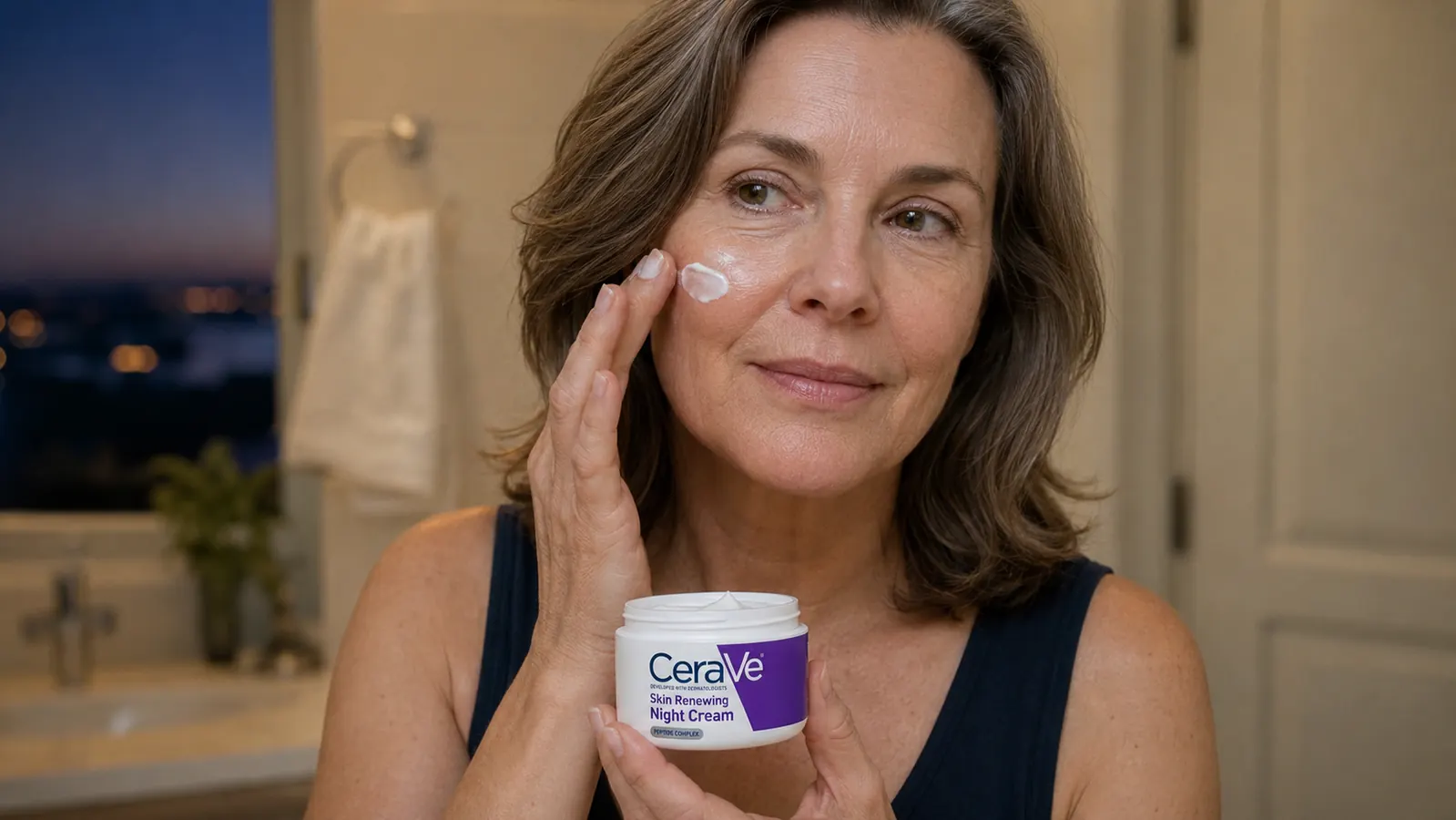
CeraVe Skin Renewing Night Cream pairs a gentle retinol with barrier-repairing ceramides and hyaluronic acid. Over 56,000 Amazon reviews, rated 4.6 out of 5.
Amazon Check Today's Price on Amazon →Step 1: Start With a Gentle Cleanse (Not a Harsh One)
The step most people rush through is the first one. You do not need a deep-pore scrub or a foaming cleanser that leaves your skin squeaky clean at night. Squeaky means stripped. And stripped skin plus retinol equals irritation. Use a low-pH, non-stripping cleanser, the milky or cream kind that rinses clean but leaves your skin feeling comfortable, not tight.
Take 60 seconds with it. Work it in gently, rinse with lukewarm water (not hot), and pat dry with a soft towel. Do not rub. Rubbing a towel over your face before retinol is a small thing that adds up over nights. When your skin feels calm and clean, not tight, not tingly, you are ready for the next step.
One more note: skip exfoliating cleansers on the same nights you use retinol cream. You do not need to exfoliate with both your cleanser and your retinol in the same sitting. Retinol is already exfoliating from below. Layering a scrub or AHA cleanser on top just multiplies irritation. Save those for the nights when you skip retinol.
Step 2: Let Your Skin Dry Completely Before Applying Retinol
This is the step nobody tells you about, and it makes a bigger difference than you would expect. After you cleanse, wait two to three minutes before applying your retinol cream. Your skin should be fully dry, not damp. When skin is damp, the retinol penetrates faster and more aggressively than it does on dry skin. That sounds good. It is not. Faster penetration on a freshly washed face means more irritation, more peeling, more redness. It is called the wet-face mistake, and it is responsible for a huge percentage of the bad retinol stories you have heard.
The same logic applies if you use any toner or essence before your retinol. Let it fully absorb and dry before layering the retinol cream over it. Some women find it helpful to set a quick timer or just walk to the other room, do something for a few minutes, come back. When your face feels room temperature and shows no shine from residual water, you are ready.
Step 3: Apply Your Retinol Cream, And Use Less Than You Think
A pea-sized amount is not a figure of speech. It is a real measurement. A pea is roughly the right amount to cover your entire face. Most people dispense two or three times that amount without realizing it. More retinol cream does not mean more results. It means more irritation for the same benefit.
The product I recommend for beginners and for anyone with dry or sensitive skin is the CeraVe Skin Renewing Night Cream. It works as a retinol cream while also delivering ceramides, niacinamide, and hyaluronic acid in the same step. That matters because retinol temporarily compromises your skin barrier, and the ceramides in this formula work to repair it at the same time. You are not fighting your own routine. Other retinol products strip the barrier and leave you dependent on a separate moisturizer to rescue the damage. CeraVe sidesteps that problem by building the barrier support into the retinol product itself.
Dot the cream across your forehead, both cheeks, your nose, and your chin, then blend it outward with light upward strokes. Avoid the immediate eye area, the corners of your nose, and your lips. The skin in those spots is thinner and more reactive, and retinol at those sites tends to cause dryness and irritation that has nothing to do with results.
For a full breakdown of how this particular night cream performs over eight weeks, including the honest downsides, see the CeraVe Skin Renewing Night Cream review.
Step 4: Follow With a Plain, Fragrance-Free Moisturizer (If Your Skin Needs It)
This is optional for some women, not optional for others. If you have normal to dry skin, you will very likely want a second layer of moisture on top of the retinol cream, especially in the first few weeks when your skin is adjusting. This is called sandwich moisturizing, and it works. Apply a thin layer of a plain, fragrance-free moisturizer over the retinol cream once it has absorbed, about three to five minutes after you applied it.
Do not use a moisturizer with active ingredients at this step. No AHAs, no BHAs, no vitamin C, no niacinamide serums. This layer is purely a barrier seal. Its only job is to hold in moisture and soften any dryness the retinol might cause overnight. The ingredients that could react badly with retinol, like acidic actives, have no business being in the same nighttime stack.
If the CeraVe Skin Renewing Night Cream is your retinol step, you may find you do not need a separate moisturizer at all. It is a rich formula. Women with dry skin tend to be fine with just the one layer. Women with very dry skin or those going through hormonal shifts in their 50s often do add a thin second layer. Listen to your skin on this one.
Step 5: Introduce Slowly, and Follow the Four-Week Schedule
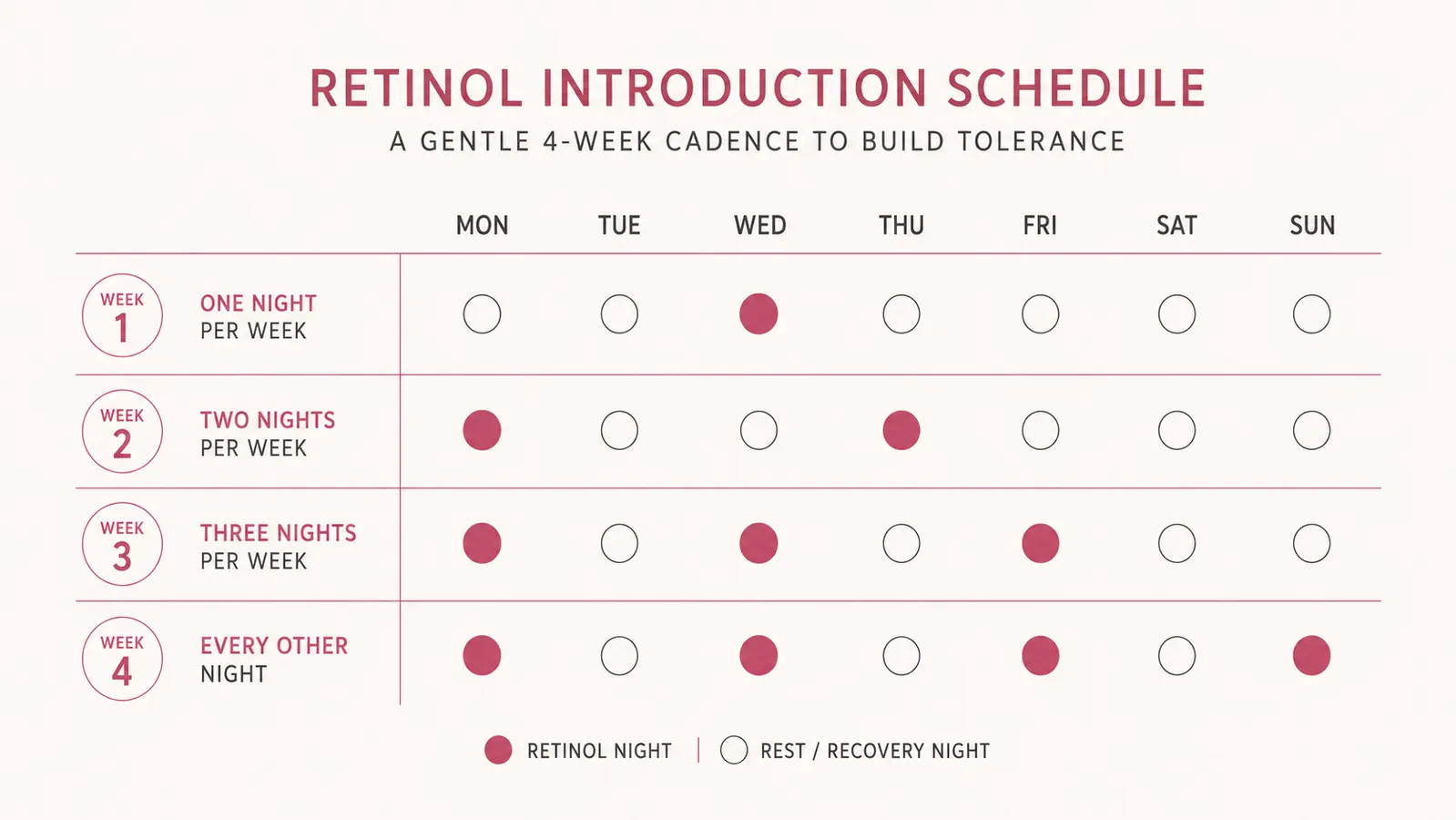
Here is where most women get impatient and pay for it. Retinol works over weeks and months, not overnight. The introduction schedule exists not to delay your results, but to let your skin build up a tolerance so you can use it consistently without shutting down.
Weeks one and two: use your retinol cream one night per week. Just one. I know that feels too slow. It is not. This week, your skin is meeting the ingredient and deciding whether it can handle it. Most women sail through this week with no irritation at all when they follow the schedule and the dry-face rule. Week three: increase to two nights per week, with at least two days between sessions. Week four: move to three nights per week. After week four, most women can tolerate every other night with no problems. Some with very tolerant skin will move to nightly use after two months. There is no prize for getting there faster.
Retinol works over weeks and months. The introduction schedule does not delay your results. It lets your skin build the tolerance to use it consistently, which is where all the results actually come from.
What Else Helps: The Supporting Cast
Your retinol routine will work better with a few habits running alongside it. None of these are complicated.
Sunscreen in the morning is not optional when you are using retinol at night. Retinol increases your skin's sensitivity to UV light. That is not a scare tactic. It is chemistry. If you use retinol cream at night and step outside unprotected during the day, you are undoing a portion of the work the retinol did overnight, plus you are accelerating the kind of sun damage the retinol was supposed to help with. A broad-spectrum SPF 30 or higher every morning is the single most important thing you can do to protect your retinol investment.
Staying well hydrated and keeping your face away from very hot water (showers, steam, saunas) in the days after retinol use also matters. Heat pushes blood to the surface and can amplify any redness or sensitivity that the retinol created. It is not a dramatic risk. It is just a variable worth controlling.
On the nights you skip retinol, keep your routine simple. A gentle cleanser, a plain moisturizer, and sleep. Your skin is doing repair work in between retinol sessions, and you do not want to interrupt it with a crowded routine.
For a deeper look at how the CeraVe Skin Renewing Night Cream formula holds up in real daily use, including how it handles dry, sensitive skin over time, the honest review of the CeraVe night cream covers the long-term picture.

Common Mistakes to Skip
Using vitamin C serum and retinol cream in the same routine is one of the most common mistakes I see. Both are actives. Both work best at different skin pH levels. Using them together in the same night does not double your results. It raises your irritation risk for no added benefit. Keep vitamin C in the morning and retinol at night. Your skin will thank you.
Skipping the routine when your skin looks good is another one. Retinol works through consistent use over time. If you use it for two weeks, see your skin looking better, and then stop, you will lose most of that ground within a few months. Think of it like flossing, not like a treatment you run for a season and retire.
Finally, do not switch products every few weeks chasing something new. Retinol takes six to twelve weeks to show its real results. Most women quit just before the skin would have turned a corner. Give whatever retinol cream you start with a full three months before drawing conclusions.
Ready to actually start? CeraVe's retinol night cream is one of the most forgiving ways to begin.
The CeraVe Skin Renewing Night Cream builds ceramides and hyaluronic acid into the formula so your barrier repairs as the retinol works. At its current price, it is hard to find a better place to start.
Amazon Check Today's Price on Amazon →