

If you've been staring at the same dark spot on your cheek for the past three years, hoping it will just fade on its own, I have some news for you: it won't. Not without help, anyway. Sun spots, post-acne marks, and the kind of uneven tone that shows up after 40 are caused by excess melanin sitting in the upper layers of the skin. They don't vanish with a good face wash. But they do respond, consistently and measurably, to vitamin C serum used correctly. The key word is correctly. Most people either give up too soon, apply it in the wrong order, or skip the one step that makes vitamin C actually stick. This guide covers all of that, step by step, so you can stop guessing and start seeing real progress.
I've been writing about skincare for a long time, and I've watched readers make the same three mistakes with vitamin C over and over: they buy a formula that's already oxidized (it smells off and the liquid is brown), they apply it after their moisturizer where it can't absorb, or they skip sunscreen and undo a week's worth of work in a single afternoon outside. This guide will get you past all of that. The product I use and recommend for this routine is the La Roche-Posay Pure 12% Vitamin C Serum. It's stable, well-formulated, and backed by nearly 19,000 Amazon reviews. It's what I reach for when I want real results without spending a small fortune.
Your skin is spending 8 hours a night not fading those spots. Let's fix that.
The La Roche-Posay Pure 12% Vitamin C Serum is one of the most reviewed vitamin C serums on Amazon for a reason. Stable formula, real brightening results, and a price that doesn't require a second mortgage. Check today's price and see if it's still in stock.
Amazon Check Today's Price on Amazon →Why Vitamin C Serum Works on Dark Spots (The Short Version)
Vitamin C, specifically L-ascorbic acid and its derivatives, works on dark spots by interrupting the production of melanin. Your skin produces melanin as a protective response to UV damage, inflammation, and hormonal shifts. The melanin clusters unevenly, and that's what shows up as a dark patch. Vitamin C slows the enzyme tyrosinase, which is the trigger for melanin production. Over time, with consistent use, the existing pigment fades as skin cells turn over, and new pigment doesn't form as aggressively. The result is a more even tone, not overnight, but steadily.
The La Roche-Posay formula uses 12% pure vitamin C, which sits in the effective range without tipping into the irritating range that some high-concentration serums reach. It also contains hyaluronic acid for hydration and salicylic acid to gently clear the dead skin that blocks absorption. That combination matters. If you're applying vitamin C to a layer of built-up dead cells, you're not getting the full effect. The salicylic acid in this formula does the prep work so the vitamin C can actually reach the skin.
Step 1: Start With a Clean, Dry Face
Vitamin C serum works best on freshly cleansed skin with no barrier between it and your surface cells. That means your face needs to be clean and, importantly, dry before you apply it. I know some routines recommend applying serums to damp skin, but vitamin C is an exception. On wet skin, the serum dilutes slightly and runs more, which means you're getting uneven coverage. A dry face gives the formula somewhere to land and start absorbing immediately.
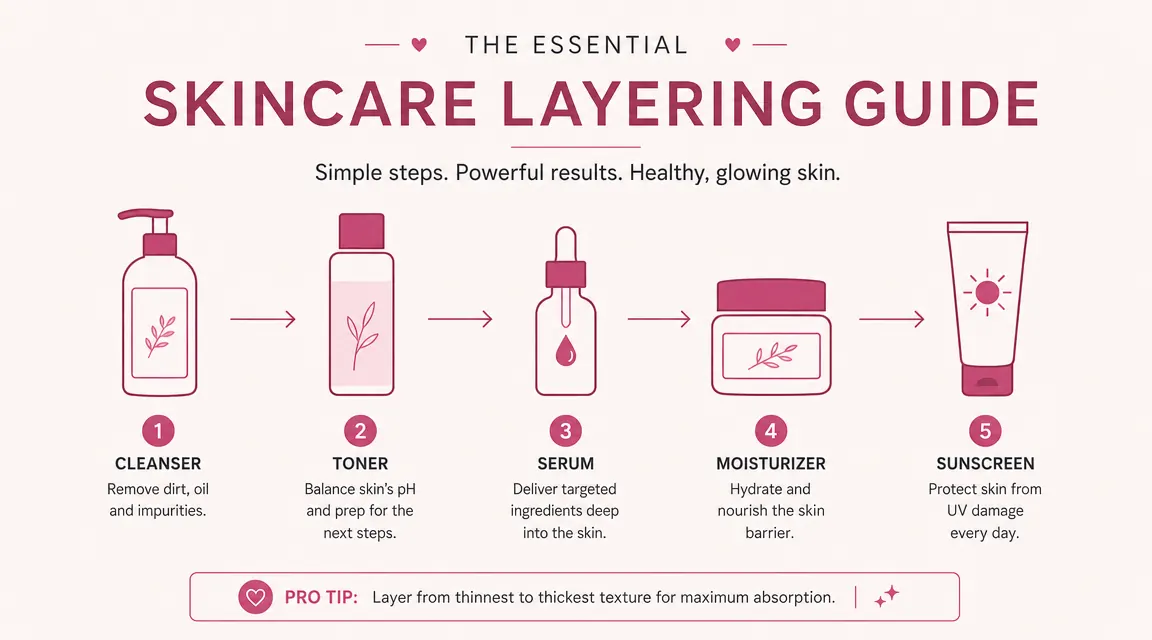
Use your usual gentle cleanser and pat dry with a clean towel. If you use a toner, apply it now and let it fully absorb before reaching for the vitamin C serum. Two to three minutes is enough. You don't need to time it precisely, just give it a moment to settle. If you're in a rush in the morning, cleanse first thing and then do everything else, like getting dressed or making coffee, before coming back to apply the serum. The extra three minutes of dry time is worth it.
One thing I hear from readers is that they're not sure whether to use vitamin C morning or night. The honest answer is morning. Vitamin C is an antioxidant, which means it's at its most useful when you're heading out into the world and encountering UV exposure and pollution. It works in the daytime as a shield and brightener, not in the nighttime when your skin is in repair mode. Save your nighttime routine for retinol or peptides.

Step 2: Apply Three to Four Drops, Starting at the Spots
Less is more with vitamin C serum. Three to four drops covers a full face without wasting product, and since the La Roche-Posay bottle uses a dropper, it's easy to control. I dispense the drops directly onto my fingertips, not my palm, so I lose less to absorption before I apply. Then I start at the areas I want to target: the spots on my cheekbones and a few marks along my jawline from an old breakout.
Press the serum gently into the skin rather than rubbing it in vigorously. Your skin absorbs it better with light, pressing motions than with friction. Work from the inner face outward, covering forehead, cheeks, nose, and chin. You can apply it under your eyes as well, though the skin there is thinner, so use a very light touch and avoid getting it too close to the lash line. The formula is designed for the face, so you don't need a separate eye serum for this step.
If your skin is on the sensitive side, start with two drops every other day for the first two weeks. Some people experience mild tingling with vitamin C, especially at 12%, which is normal. If you're seeing redness or prolonged stinging, dilute it by applying a thin layer of lightweight moisturizer first and then applying the serum on top. That's a workaround, not the ideal method, but it lets you build tolerance without quitting.
Step 3: Let It Absorb for 60 to 90 Seconds
This is the step most people skip, and it's the reason their vitamin C serum doesn't seem to work. If you apply moisturizer on top of vitamin C immediately, you're diluting it and, in some cases, creating a physical barrier that pushes it off the skin before it can absorb. Give it at least 60 seconds, and 90 is better. You'll feel the serum shift from slightly tacky to more settled. That's your signal.
During those 90 seconds, this is a good time to apply any eye cream to the orbital area, since you're not touching your face anyway. Then come back, do a quick check that the serum feels absorbed rather than sitting on top, and move to the next step. If you're still feeling a tacky film after two minutes, your skin may be producing a lot of sebum and the serum is having trouble absorbing. In that case, try blotting gently with a dry tissue before continuing.
Vitamin C is an antioxidant, which means it's most useful when you're heading out into the world. Apply it in the morning. Save your nighttime routine for retinol.

Step 4: Apply Moisturizer, Then SPF
Once the vitamin C has absorbed, your moisturizer goes on next. If you're using a lightweight gel moisturizer, a thin layer is enough. If you're using something richer, apply it in the same gentle pressing motion, working it in without rubbing hard over the freshly applied serum layer. The moisturizer seals in the vitamin C and keeps the skin barrier intact, which matters because vitamin C can be mildly exfoliating at higher concentrations.
Then comes SPF. This is non-negotiable. I cannot stress this enough: if you're applying vitamin C to fade dark spots and you're stepping outside without sunscreen, you are erasing your progress. UV exposure is what caused or deepened those spots in the first place. Every bit of unprotected sun time re-stimulates the melanin production you're trying to slow down. Use a broad-spectrum SPF 30 or higher every single morning, even on cloudy days, even if you're mostly inside. A study window counts.
The layering order, in full, looks like this: cleanser, toner (optional), vitamin C serum, wait 60 to 90 seconds, moisturizer, SPF. That's the routine. It takes about seven minutes including the wait time. It is not complicated. The difficulty is doing it every morning without exception, because vitamin C is a cumulative ingredient. One skipped week sets you back more than you'd expect.

Step 5: Store Your Serum Correctly and Replace It Before It Turns
Vitamin C is notoriously unstable. Pure L-ascorbic acid oxidizes when exposed to air, light, and heat, and once it oxidizes, it no longer works. An oxidized vitamin C serum will look brownish or orange instead of clear to pale yellow, and it may smell slightly like hot metal or vinegar. If your serum looks or smells like that, it's time to replace it, not keep using it hoping it will still do something. It won't brighten anything at that point.
The La Roche-Posay formula uses a stabilized version of vitamin C and comes in dark packaging that slows oxidation. Still, best practice is to store it in a cool, dark location, not in a steamy bathroom. I keep mine in my bedroom nightstand, which stays room temperature year-round. Once opened, use it within three months for best results. If you travel, keep it in your carry-on rather than a checked bag that may get exposed to heat.
Also worth noting: the La Roche-Posay bottle uses a pump-free dropper rather than an open jar, which limits air exposure per use. Avoid decanting it into another container. Every time you open a different jar, you're letting in more air. Use the original bottle and close it promptly after each use.
What Else Helps Fade Dark Spots Alongside Vitamin C
Vitamin C does the heavy lifting on pigmentation, but a few other ingredients can support the process without fighting against it. Niacinamide, found in many moisturizers and targeted serums, also inhibits melanin transfer within skin cells and works well as a partner ingredient. Just layer it after vitamin C has absorbed, or use it in your evening routine to keep the two from competing for absorption. Some people worry that niacinamide and vitamin C cause problems when combined, but that concern is largely outdated based on older formulation science. Modern formulas at normal pH ranges play well together.
A chemical exfoliant two to three times a week also speeds things up by accelerating the cell turnover that eventually clears the pigmented cells off the surface. Glycolic acid and lactic acid are the most approachable options for women with mature skin. If you're already getting some light exfoliation from the salicylic acid in the La Roche-Posay serum, you may not need much more. Pay attention to how your skin responds and ease back if you see flaking or irritation. Overdoing exfoliation actually inflames the skin and can worsen pigmentation over time.
What won't help: scrubbing dark spots with a physical exfoliant, using lightening products that contain mercury or undisclosed ingredients sold through social media, or trying to speed up results by using more serum than recommended. Vitamin C at 12% works. Doubling the drops doesn't double the results. It just increases the chance of irritation. Consistency with the correct dose, every morning, over eight to twelve weeks, is what actually moves the needle.
What a Realistic Timeline Looks Like
I want to set honest expectations here, because the marketing around dark spot treatments often promises results in a timeframe that leads people to quit before they see real change. Week two to three: some people notice their skin looks brighter overall. Not necessarily fewer spots yet, just a general clarity. Week four to six: spots begin to look lighter around the edges. They're not gone, but they're less defined. Week eight to twelve: visible fading on most spots for most people with consistent morning use and daily SPF. Post-acne marks tend to respond faster than true sun spots. Deep, long-standing sun damage from years without sunscreen takes longer and may need a dermatologist's help with something stronger.
If you hit week twelve and the spots have barely moved, consider whether you're actually using SPF every day, whether your serum might be oxidized, and whether any new sun exposure is undoing your progress. Those three factors account for most cases where vitamin C doesn't seem to be working. The formula itself is rarely the problem.
Eight weeks of consistent use. That's what it takes. Here's the serum worth committing to.
The La Roche-Posay Pure 12% Vitamin C Serum has nearly 19,000 reviews on Amazon and a 4.4-star average for a reason. It's stable, it absorbs cleanly, and it works on real women's skin, not just lab conditions. If you're ready to start a routine that actually moves the needle on dark spots, this is the one I'd tell a friend to try first.
Amazon Check Today's Price on Amazon →