
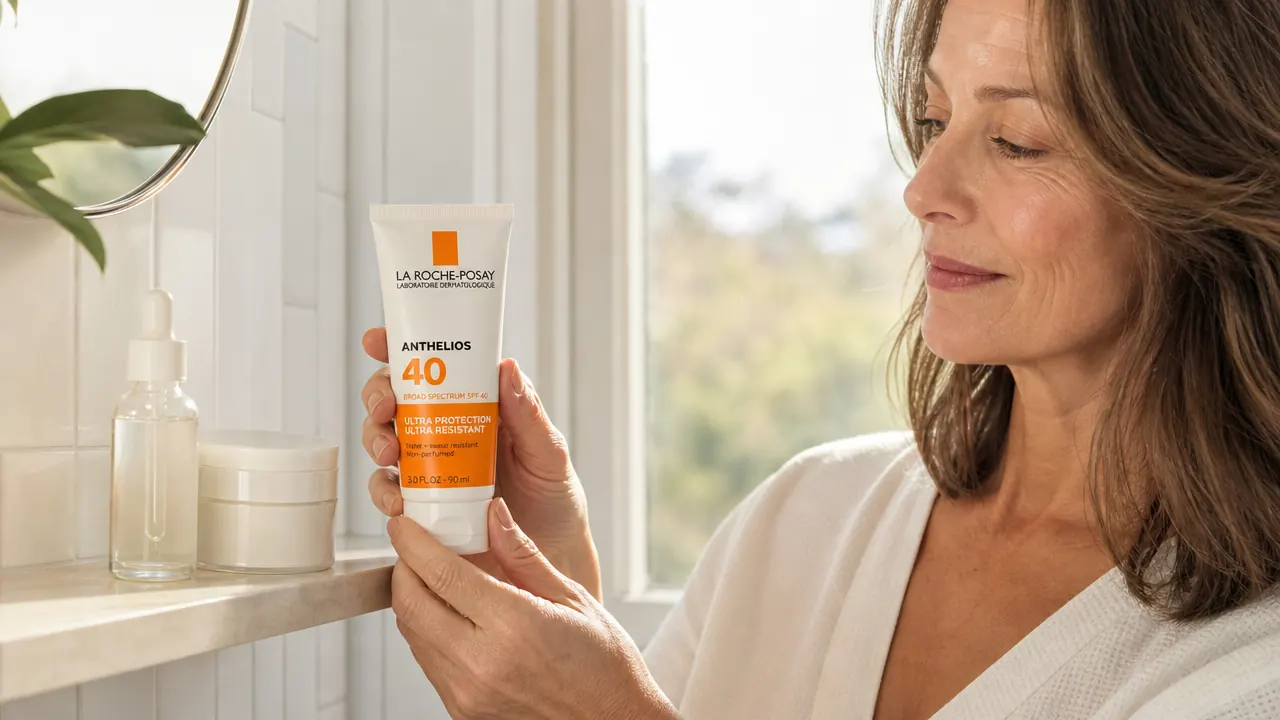
My friend Carol sent me a screenshot last spring. She had spent a significant amount on a tube of La Roche-Posay Anthelios SPF 40, used it for three days, decided it felt "too light to be doing anything," and gone back to her budget drugstore bottle. Three weeks later, her dermatologist said the same thing mine said to me: the sun damage was progressing, she needed to actually commit to daily SPF, and the formula she was half-heartedly using was better than nothing but clearly not sticking as a habit. Carol messaged me wondering if the expensive one had actually been worth it. My answer was: yes, but not for the reasons the marketing suggests, and not without a few real trade-offs she should have known about before she quit.
I have been using La Roche-Posay Anthelios SPF 40 Ultra-Light Fluid for long enough now to have a clear opinion about the value question. This is what I would tell Carol, or anyone else who is trying to decide if the premium price makes sense for them.
The Quick Verdict
Worth the premium over drugstore sunscreens specifically if you have sensitive or reactive skin that has rejected cheaper formulas. Not worth it if an inexpensive option is already working for you without irritation.
Amazon Check Today's Price →Premium sunscreen sounds like a lot until you add up the cost of treating one melanoma or reversing five years of sun damage with laser treatments.
La Roche-Posay Anthelios SPF 40 Ultra-Light Fluid. 4.5 stars, 31,000+ verified reviews, fragrance-free and non-comedogenic. Developed for sensitive and post-procedure skin.
Amazon Check Today's Price on Amazon →What Nobody Tells You Before You Buy
The product descriptions and even most reviews lean heavily on the sensitive-skin angle and the matte finish. Both of those things are true and genuinely good. But there are a few things worth knowing upfront that I never see mentioned until people are already in the return process.
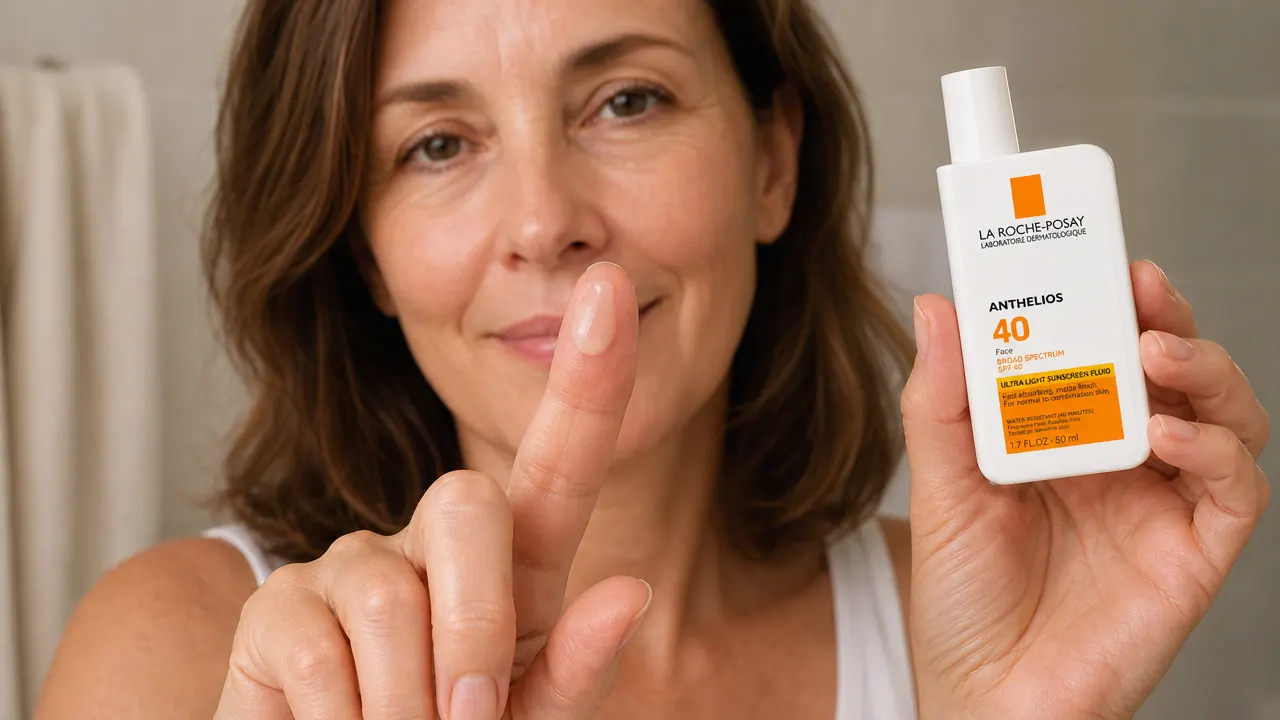
The first one is this: the formula is noticeably thin. Thinner than any sunscreen I had used before. When you squeeze it onto your fingers for the first time, your instinct will be to apply more because it does not feel substantial. If you act on that instinct you will apply too much, your skin will look shiny within an hour, and you will conclude the formula is greasy. The correct amount is less than you think. A volume roughly the size of a small pea, spread across your full face and neck. If you use that amount and wait 45 seconds, it sets to a clean matte-satin finish and disappears. If you use twice that amount because it felt like nothing, it will not set properly and you will spend the day patting your forehead with a tissue.
The second thing: the tube is genuinely frustrating in the final two to three weeks of use. The packaging does not stand up well, the flip cap does not reseal tightly, and getting the last 15 percent out requires squeezing hard and eventually cutting the tube. For a product at this price point, that feels like a missed detail. Some versions sold in European markets come in a pump format that is far more practical. If you order from an international Amazon seller and see the pump option, it is the same formula and worth the minor price difference.
The Honest Value Case: When the Price Is Justified
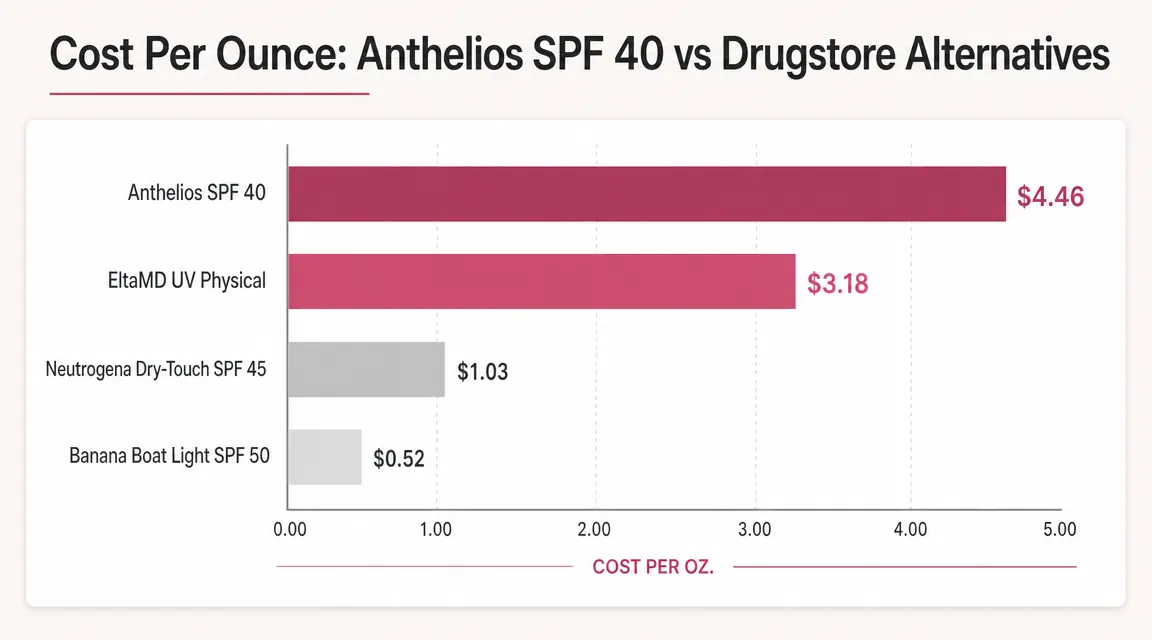
Let me lay out the math plainly. At the current price for 1.7 ounces, you are paying a premium per ounce. A well-regarded drugstore option like Neutrogena Dry-Touch SPF 45 runs considerably less per ounce depending on the retailer. So you are paying three to four times more per ounce for the La Roche-Posay. For most product categories that kind of gap would not be worth discussing. Sunscreen is different, because the single biggest variable in whether people actually wear sunscreen daily is how it feels on their skin. A sunscreen you skip because it breaks you out, leaves a white cast, or feels greasy has zero sun protection value regardless of its SPF number.
The Anthelios formula earns its premium specifically for people in these situations: you have reactive or rosacea-prone skin that breaks out or flushes with standard formulas; you gave up on daily SPF because nothing felt wearable; you wear makeup and prior sunscreens caused pilling or separation under foundation; or you have post-procedure skin that is particularly reactive. In those cases, the extra cost is not paying for a La Roche-Posay label, it is paying for a formula that was engineered from the ground up for difficult skin. That is a real difference.
If none of those situations apply to you, if a drugstore SPF is already working fine and your skin tolerates it without complaint, then save the money and stick with what works. The Anthelios formula is not magically superior at blocking UV rays. SPF 40 is SPF 40. The advantage is entirely in the tolerability and wearability of the base formula.
The Chemical Filter Question: What You Should Know
This product uses chemical UV filters exclusively: avobenzone, homosalate, octisalate, and octocrylene. That is worth understanding before you buy, for two reasons.
The first reason is that chemical filters are what make the lightweight, no-white-cast finish possible. Mineral formulas use zinc oxide or titanium dioxide, which are physical blockers that scatter light and create that telltale white cast or chalky residue on deeper skin tones. If you have been frustrated by white cast from mineral sunscreens, chemical filters are the solution. The Anthelios formula delivers full broad-spectrum UVA and UVB coverage without any of that.
The second reason is that a small group of people genuinely react to chemical UV filters, and those people will not do well with this product. Avobenzone and oxybenzone (which is NOT in this formula, worth noting) are the most common culprits. If you have had a reaction to a chemical sunscreen in the past, patch-test the Anthelios on your inner arm for three days before committing to full face use. The absence of oxybenzone in this formula means it is better tolerated than many chemical options, but individual sensitivities vary. Also worth knowing: if you are pregnant, some doctors advise mineral-only sunscreens out of caution regarding chemical filter absorption. That guidance is still evolving, but it is worth discussing with your OB if relevant.
The formula earns its price for people who have failed at daily sunscreen before. For everyone else, the best sunscreen is still the one you will actually put on.
How the Formula Performs Through a Real Day
I work in a mix of indoor office, outdoor errands, and weekends that often involve an hour or two outside. Here is how the Anthelios fluid actually performs across those situations.
Morning application is genuinely pleasant. The texture is almost serum-like as it goes on, and if you use the right amount it absorbs quickly and leaves the skin looking like skin rather than like skin with sunscreen on it. Foundation or tinted moisturizer goes over it without pilling if you wait about a minute. I have tested this with several different makeup bases and the Anthelios plays well with all of them.
Midday wear is good but not perfect. On humid summer days, my combination skin shows some shine by around noon, mostly in my T-zone. This is less about the sunscreen and more about my skin type, but I want to flag it for anyone who is oil-prone and hoping this formula will keep shine at bay all day. It will not fully control oil because it is not formulated as a primer or oil controller, it is formulated as a sunscreen. A mattifying primer layered underneath does solve the problem, but that adds a step and cost.
Reapplication is the practical challenge that all daily sunscreens face. SPF chemistry requires reapplication every two hours of direct sun exposure to maintain full protection. When you are wearing makeup, applying fluid sunscreen over it is not ideal. The practical solution most dermatologists recommend is a powder sunscreen brush for midday touch-ups. The Anthelios fluid works best as the morning base, with a powder SPF over makeup for reapplication. That means budgeting for two sunscreen products if you are outdoors for extended stretches, which adds to the overall cost calculation.
Three Things I Genuinely Like About This Product
First, the fragrance-free formula is the real deal. Many sunscreens labeled fragrance-free still contain masking fragrances or heavily scented inactive ingredients. The Anthelios has no detectable scent whatsoever. For anyone with fragrance sensitivity or who has had reactions to scented sunscreens, that absence is meaningful.
Second, the non-comedogenic claim holds up in practice. This is not always true of products that make this claim. I tested it on combination-to-oily skin with a history of jawline cystic breakouts, and the Anthelios did not trigger a single one across the test period. The formula avoids the heavy silicones that most commonly cause congestion in acne-prone skin.
Third, it layers beautifully under or over serums. If you are running a vitamin C serum in the morning, apply it first, let it absorb fully, and then apply the Anthelios. They do not interact or ball up. Same with niacinamide, hyaluronic acid, or lightweight peptide serums. If you are curious how vitamin C serum fits into a sun-protection routine, my full daily-wear review covers the layering order in detail.
What I Genuinely Do Not Love
The tube packaging is already mentioned above, but it deserves its own line here: it is genuinely the worst part of this product and it is entirely avoidable. A mid-priced skincare product with a tube that is hard to use in the last quarter of its life is a bad experience at a price point where it should not be. La Roche-Posay sells other products with better dispensers. I do not understand why the Anthelios line still ships in this format in the U.S.
I also want to be honest about what this product does not do. It does not moisturize. The formula contains a small amount of glycerin but it is fundamentally a sunscreen, not a moisturizer with SPF. If you have dry skin and you are hoping to combine your moisturizer and sun protection in one step, the Anthelios Ultra-Light Fluid is not that product. You will need your moisturizer underneath, which adds a minute or two to your morning routine and requires that you actually wait for the moisturizer to absorb before applying the SPF. For some women that is a non-issue. For others who are already rushing through their mornings, it is a real friction point.
What I Liked
- Genuinely lightweight formula that does not feel like sunscreen on your face
- No white cast and no pilling under foundation or makeup
- Non-comedogenic with no detectable fragrance, both backed by actual performance
- Broad-spectrum UVA plus UVB protection with stable avobenzone chemistry
- Layers cleanly under serums, moisturizers, and all types of makeup bases
- Thermal spring water base actively calms reactive and redness-prone skin
Where It Falls Short
- Premium price per ounce is only justified for sensitive or reactive skin
- Tube packaging wastes product and is frustrating in the final weeks
- Chemical UV filters only, not suitable for those requiring a mineral formula
- No moisturizing benefit, dry skin needs a full moisturizer underneath
- Shine control is limited, combination and oily skin types may see midday gloss

Who This Is For
This is the sunscreen for someone who has tried and quit daily SPF at least once because the products were unpleasant to wear. If breakouts, white cast, pilling under makeup, or an unpleasant film feeling have kept you from building the SPF habit, the Anthelios Ultra-Light Fluid removes all of those barriers. It is also the right pick if you have sensitive, rosacea-prone, or post-procedure skin and your dermatologist has been asking you to find something your skin will not react to. The formula was originally developed for post-procedure use, which means the reactive-skin engineering is serious, not marketing language.
For anyone considering this against other options, my comparison of La Roche-Posay Anthelios vs EltaMD UV Physical puts both products side by side so you can see exactly where the differences land on price, finish, and mineral versus chemical filter choice.
Who Should Skip It
Skip it if you have known sensitivity to chemical UV filters or have reacted to avobenzone or octocrylene in the past. Skip it if you are pregnant and your doctor has advised mineral-only sun protection. Skip it if your skin is consistently on the dry side and you rely on your SPF step to also provide meaningful hydration, because this formula does not deliver that. And skip it if a less expensive sunscreen is already working for your skin without irritation. In that case, you have already solved the problem and there is no reason to spend more.
The honest summary is this: La Roche-Posay Anthelios SPF 40 Ultra-Light Fluid is a genuinely well-made sunscreen that earns its reputation for tolerability and wearability. It is worth what it costs for the right person. Whether you are that person comes down to your skin type, your reaction history with other sunscreens, and whether the daily SPF habit is something you have already built or something you are still trying to start.
If every other sunscreen you have tried has ended up abandoned in a drawer, this is the formula worth trying next.
La Roche-Posay Anthelios SPF 40 Ultra-Light Fluid. Fragrance-free, non-comedogenic, no white cast. 4.5 stars from more than 31,000 Amazon reviewers.
Amazon Check Today's Price on Amazon →